afterflood libation
There is a mercurial shade of my spirit that promises to go far away and eventually return. During these stretches of time I inevitably lose aspects of myself I thought I had a pretty tight grip on, which is to say my sense of self is destabilized, the dam breaks and the waters of intense perceptive load come rushing in. These travels are not strictly geographical, and in fact can be entirely psychological. Returning home after being elsewhere is symbolic of a loop closing, and it is really never as simple as there and back again.
Recently in my journal I wrote that music is an expression of the loss of time, not a decoration of it. I was sitting on a patio where strangers were playing pétanque at dusk and behind sunglasses I was crying because it occurred to me that the musical rhythms I had been struggling to resolve with my whole body and being were perhaps the asymptotically untouchable keys to a dislodging I pray for, of old pains around which have grown layers of emotional patterning that seem more or less entrenched well into my adulthood.
Taking this thought further, it occurs to me that dancing is the way I move when my feeling of time is altered, and my body moves through a kind of nonlinear sieve. If my life is a passing of time and the playing out of mortality then naturally I want the passing to be of a brilliant sort. I want it as exquisite as Longquan celadon, lithe as a koi fish, then sharp like a needle piercing skin. Hence dancing as celebration, ritual, ecstasy, fervor, but also as life notated by chronometry superseding the rigid cyclicities of civil time, circadian time. Dancing can also happen totally internally, as though the laws governing thoughts and qi bend slightly in attunement with certain vibrations. Standing in front of the speaker boxes of Tweak Soundsystem, I felt the force of tsunami waves at once impacting my every cell and cajoling them into a mighty synchronization, at the same time obliterating my sense of clockwise time in favor of one formed by slippages, eddies, and plate tectonics. In this multimodal time words have no place, only yelps and faithful utterances.
In the alterations of time, rhythms demarcate topologies. Topologies are lineages, and practitioners of the craft locate ephemeral singularities. In the era of recorded music such timepieces are kernels around which layers of culture can grow, time rippling through groupings of individuals and collectives and shaping impressionistic manifolds.
I pause to wrestle with the notion that this is all easier for me to grasp than the mundane act of naming a feeling and expressing it to another.
But in my heart there is a world where I have never spoken in English and I don't struggle to communicate at all. This is the world of Ys, flooded by the so-called transgression of Dahut, a figure who has been swimming through my consciousness for the last month ever since I found an Alan Stivell record at Tangerine Dream. On a different record of his, Renaissance of the Celtic Harp, is a track named for the lost city. When I hear the strums of this harp I see waves of a hundred colors lapping gently at architecture of shells and stone, rendering immortal countless lovers in frozen repose, midnight conversations swirling into circles of foam. It is a flood of osmanthine vapors which painlessly lift centuries of human folly into the embellishments of sound. Mothers, accepting their children back into the womb, rewind for them intricate toy clocks to play in reverse every harsh word, every worldly disappointment.
Or perhaps it is the strum of a bard years later, recounting the tragic story. Does Dahut mourn the denizens of the city she asked her father to create? Or, the city and its tales being figments of her imagination, her own conscience and slate may very well be wiped clean. To me she is a figure of freedom, freedom not in the cheap sense of a bird soaring from its cage but that of ruinous catastrophe, to walk away from utter devastation and be transmuted into new form. As a mari-morgan she traverses the sea with newfound grace, carrying in her corporality the singular point of loss as she brought forth the decisive act of sexuality upon her world.
In the depths of the ocean lurk unknowable beasts who emit rumbles imperceptible to human ears. I dream of these vibrations, and instead of remembering pictures when I awaken I am first surprised by the quietness where there is an expectation of echoes. Suppose this is where my penchant for low end pulsation comes from, that and a watery death drive that sees me tumbling at the bottom of the earth's blue-green seas.
After Alan Stivell's Ys the natural follow-up is Joanna Newsom's Ys, which moves me to tears within the first two minutes. Her command of English brings the unfathomably complex curvature of large volume fluid currents to a language I've long wanted to disown and escape; illuminates sharply all the ways I've failed to communicate with the words of ancestors who aren't mine. From her mouth the words carry dimensions of information that alight my spirit to build cities and civilizations in an instant, monkey and bear and other characters pouring forth from emotions that suddenly flow freely from pores that were sealed shut inside me as I navigated labyrinths of the day to day.
It strikes me that although pianos, harps, even glass bells have enchanted and tempted me over the years, I am inexorably in love with electronic machines. Gazing at a PCB full of components, I witness the bustling city of denizens who effortlessly evade capture and direct observation, all of whom I could inadvertently destroy with a flood of voltage.
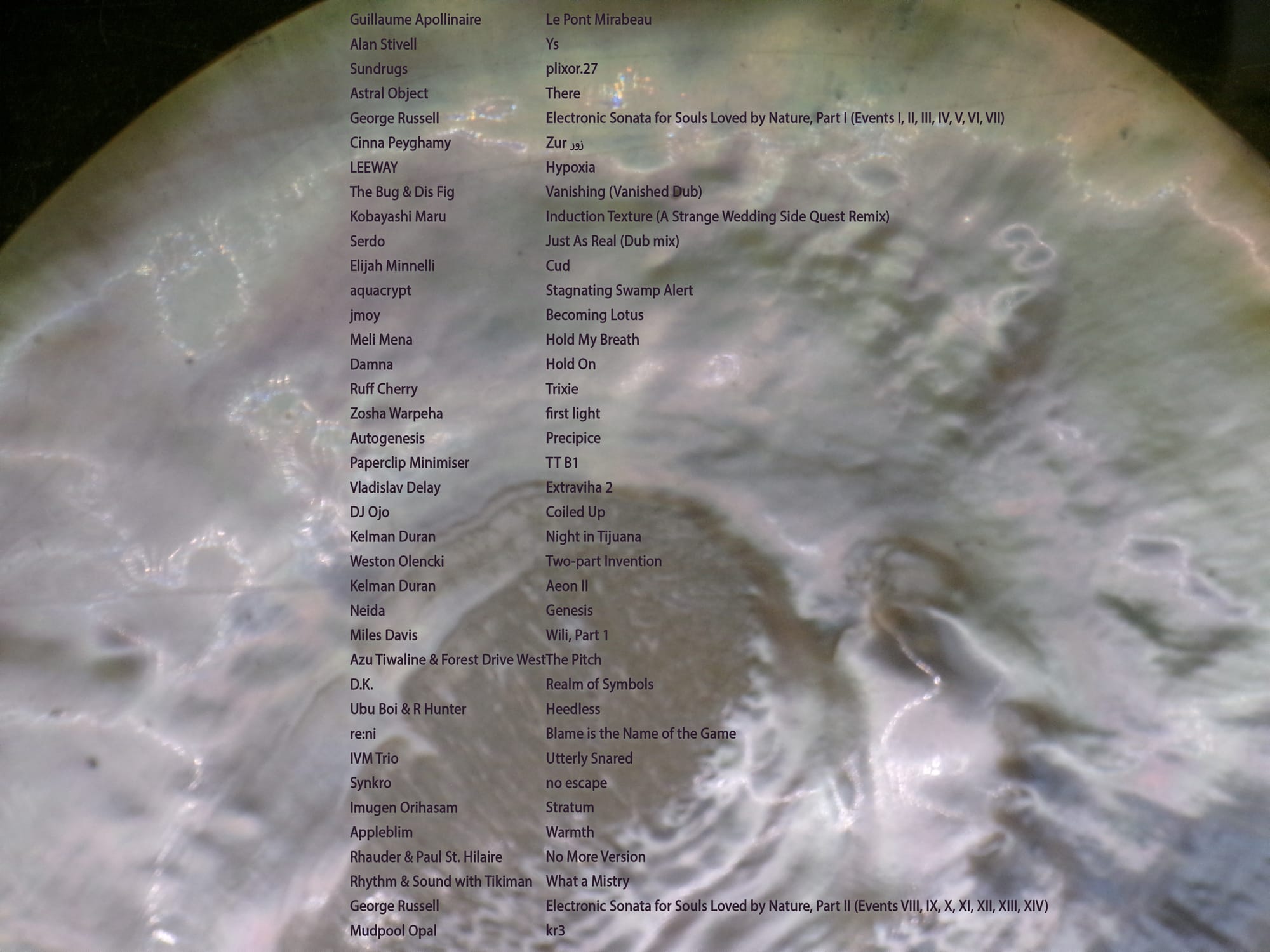
In the gridded landscapes of Ableton Live I build cities too. My architectural style is a continual transgression, leaning towers of strangely distributed colors, nothing safe from the scalpel. Despite having studied arrangement structures and making efforts to follow suit with neat sections and blocks, in the end every composition comes to resemble this:
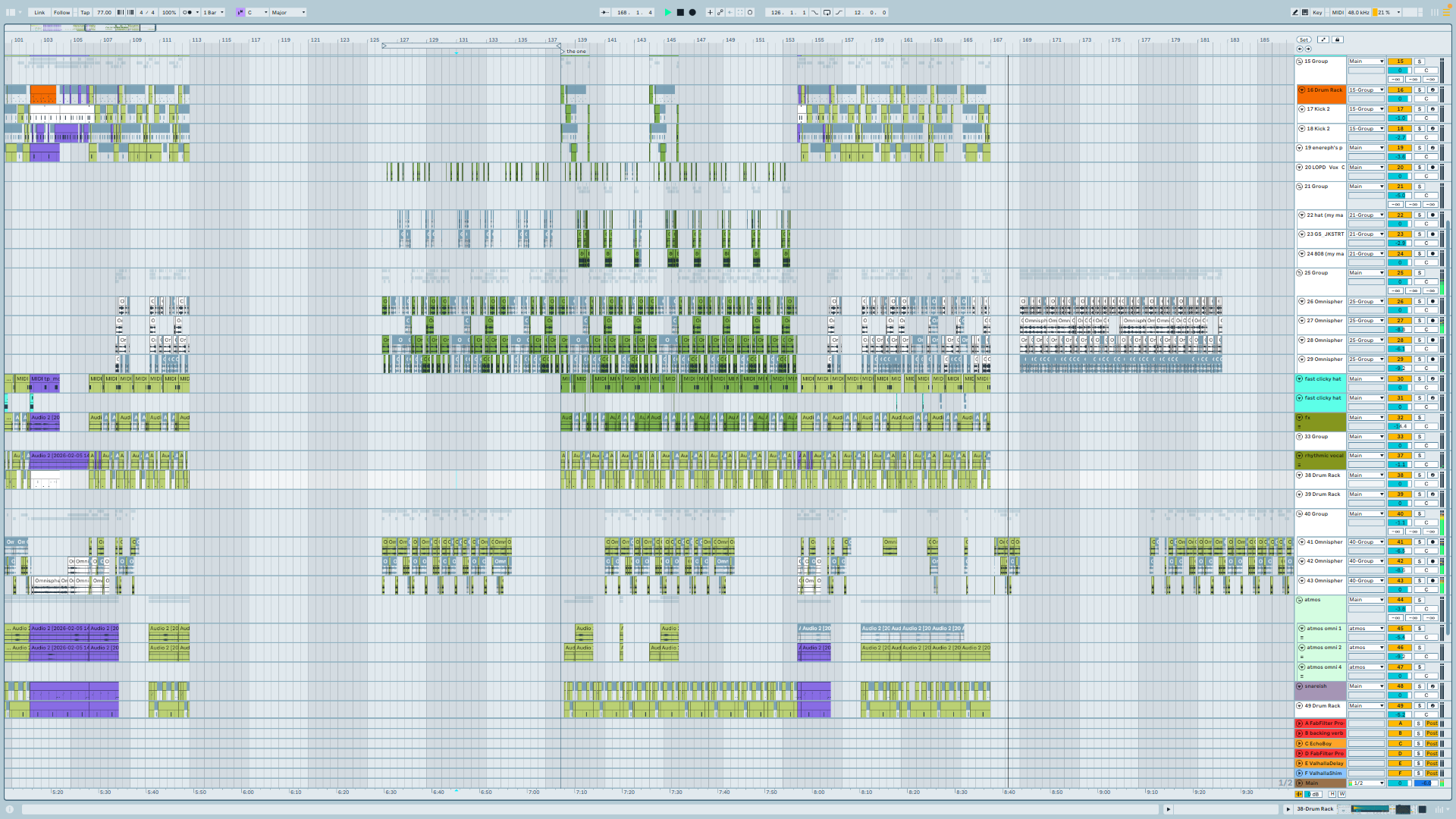
These are cities made of samples and shreds of time, ideas mashed, imported from other projects, combined, duplicated, excised. The denizens are points of encounter between sounds produced by myself, others, and unknown sources and the volatile grip of my attention. Clips in haphazard arrays draw pointilist murals of my spelunking in the depths of this instrument I play which is an aqueous, shapeshifting, formless flood. The screen flickers between a bird's eye view and a cross-section, a woven tapestry and chainmail.
In this city no language is spoken, in fact discrete words and concepts do not exist. The entire city and everyone in it is a music, an uncountably pronged music which is all of the music that such a city could ever create, which is every configuration of vibrational currents housed in fleeting forms and substrates.
One day our cities will be reduced to dust and the spirits who remain will hold the only memories of these places, through remembrance spinning the holographic city alive continually, in perpetuity, out of diaphanous threads. When the spirits are sent to rest, iridescent filaments of the hologram will unravel, and the interlacing lines of human stories will be freed from one another. Such a complex web that no one could fathom untangling, that attempts to have wrought disaster upon disaster. So we form fictions, vignettes and stories of characters whose lives touch one another, this person who brushed past the co-protagonist in the market, unknowingly privy to a chimeric affair that touches their progeny 30 years later. This kind of story easily entrances us with the illusion that a slice of the divine plan is touchable by a human mind.
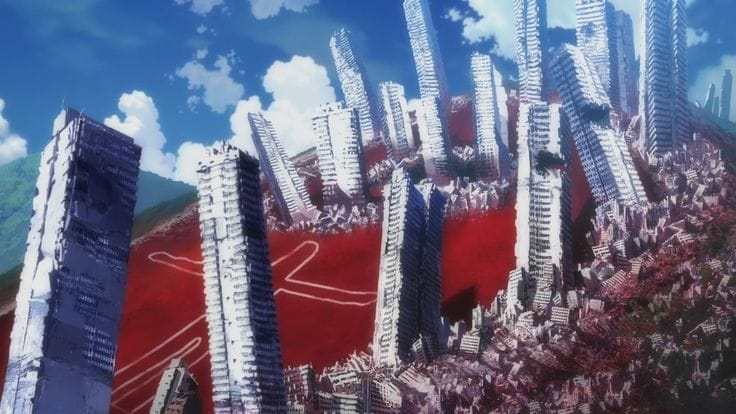
There are forever more dirges to be sung expressing the grief of cities lost. Cities, the great bodies of ideas whose forms house and shape the lives of beings. When I think of cities I can't help but think of the ones that have shaped me, Seattle and New York, Detroit and Cleveland, Portland, Marseille.
Arriving in sweltering heat to Brussels I felt nostalgic for mist, the kind that lingers near the ground on the sides of highways winding through conifer forests standing austerely against backdrops of mottled grey. In the brutal sun of high summer I often retreat to such spaces, yearning for a melancholic cloak to keep my thoughts and emotions bundled. The set I played at Kiosk was an ode to mist, anchored by excerpts of live sets that I've performed since 2024, in particular at Osmosis in the Trees and Endless Spill. These live sets consist of material that behave as fog does, unsure of itself, placid yet unable to linger long. Around these pieces I assembled music composing a portrait of a figure in a moonlit forest, thick in atmosphere and punctuated rhythmically by tendrils of vines and unknown silhouettes. Billowing specters roam the trails, and the body trails vapors upon exit, crisp breath uttering thanks for having left you unscathed.
I was inspired by Damna's mix on Rinse which explored the osmotic threshold between low end pressure and ambience, as well as a conversation with Mai where we touched upon such grey areas and how much more there is to uncover. One time last autumn Camryn described a Libran wish for balance that is nonetheless comprised of extremes, oscillating at low to high frequency but from a perspective zoomed out sufficiently flattens into a line. I think of the elements of music - counterpoint, crescendos and diminuendo, ambient and club, and from a Piscean mode of being there lies an unearthly desire for an illusion of balance to be maintained at the same time that the whole affair is careening into the sonic abyss. The DJ set that never ends, the sustained note of a clarinet that even through inflections in tone grows into a wall of sound, overwhelming all sense and limit. But when the moment of rupture comes, it is merciful as the strum of Stivell's harp.
The image from a concave mirror, after having gone off into the infinite, suddenly appears before us again—so grace returns after knowledge has gone through the world of the infinite 1
Because I have never quite been one for the party the way I approach DJ sets is as though turning a key to unlock a place that I have yearned for, and that I believe others may be, but it is a place with no contours of existence until the moment the waves come through the soundsystem. Often the stark contrast of the booth conditions to the imagined attributes of this placeless place leaves me stunned for the set's duration. There I am in a flight mode interrupted as time slips by fashioning architectures of an elsewhere.
Then there is track selection, a process that beguiles me even as it pulls me deeper into mazes. I've come to see track lists as a form of automatic writing or subconscious journaling, a reflection of trust that encounters with music, as with people, places, and things, ultimately come at fated times.
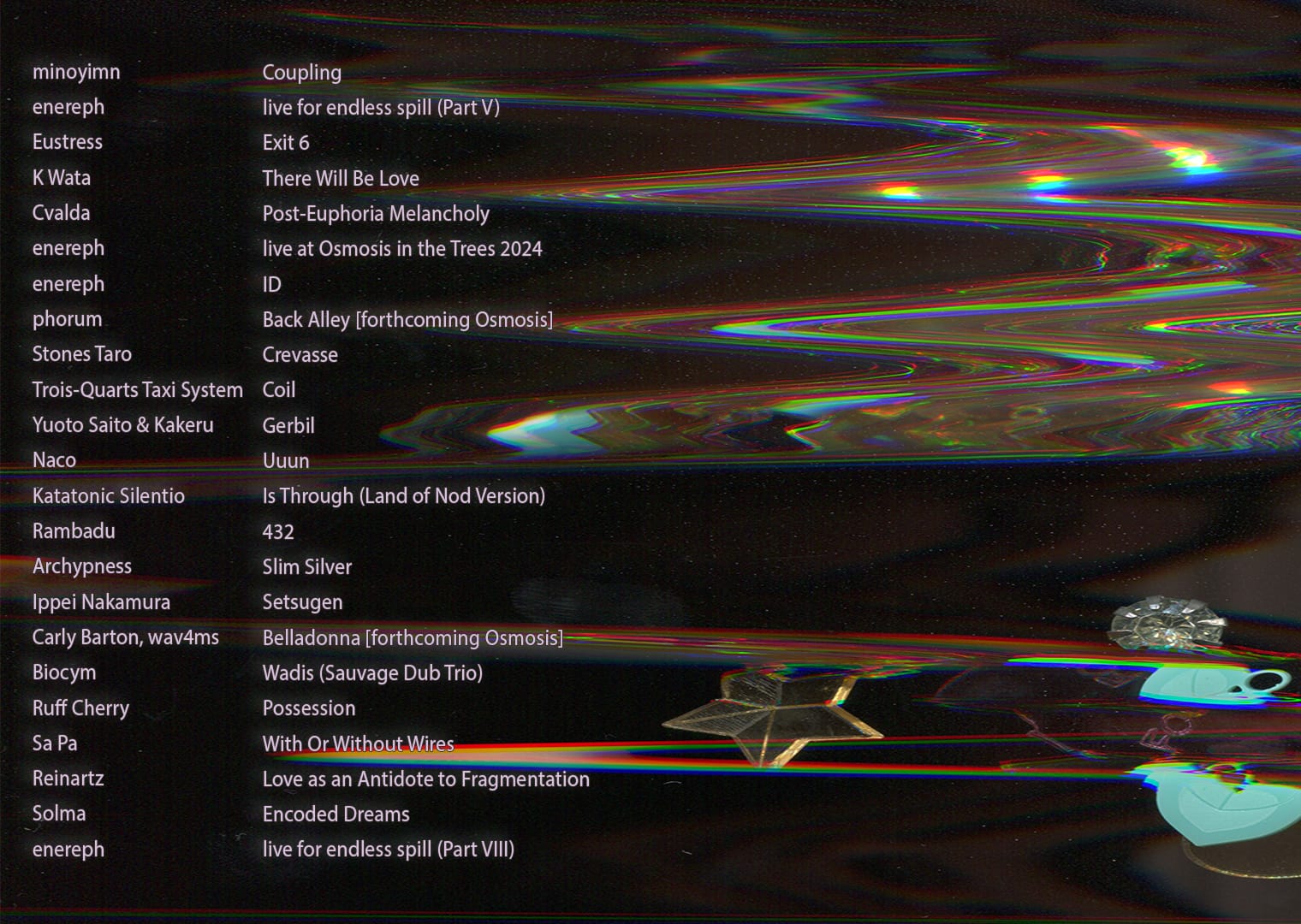
Just over a month later, back in Brussels and this time with company, I was to play at Gimic. The intensive canicules through June and July had burned holes in my brain. During the preparation period I would be leaving the apartment at 8pm for breakfast, drinking espresso to the sunset, feeling even more than usual that my circadian rhythm was a hopeless collagist, ripping and pasting together vignettes into what could resemble the beginning, middle, and end of a day.
The same collagist directs my interests and the expansion of my intellect, in what I can only describe as the coagulated result of running concurrent chips down a vast Plinko machine. For had I not been in Cahors speaking with Tom I would not have been reading More Brilliant than the Sun on my phone that afternoon, nor would I have opened Youtube to listen to Electronic Sonata for Souls Loved by Nature through wired earbuds.
This music was destined to arrest me amidst the fragments of my oscillatory existence, for a few moments here and there, and longer moments conjoining into scenes in the days thereafter when I would play it upon waking, while taking a bath, on the bus, walking unfamiliar streets, in the radio booth. Looking into the making of this music, I found resonance in the process by which Russell pieced it together, a stitch and overlay cut copy collage of found recordings and live playing. It mirrored the tenuous structures of my days and in turn the state of contemporary existence as a blurred becoming of combinatory form, in which one gradually becomes aware with dual excitement and horror that there is very possibly no whole idea or core essence to speak of, only endless horizons of pasting tiny bits of meaning into temporary shards of understanding.
At the terminus of the Recorded Age, every piece of recorded music is functionally (if not spiritually) no different than a sample. In a situation where any recorded music can theoretically be used as raw material in another artist's music, the single percussion hit in a folder next to Alice Coltrane, Lord, Help Me To Be see each other eye to eye cataclysmically. With samples I've held an uneasy relationship over the years, working through logical rounds of how to properly use material not of my own hands (all whilst my computer is not of my own hands, the software I use is not of my own hands). Samples, as readymade sounds, can be like a pack of Bic pens in the office supply aisle of a supermarket or pigment pulverized from lapis lazuli just the same. How they're used can also be cheap or holy: a set of samples I download today and the same set downloaded two years from now will necessarily be distinct, by virtue of the way they're processed and activated, stretched beyond recognition or retaining some echo of original character. Selections of samples and of musical timepieces alike are the sites and nexus points of taste, the alchemical outcome of my orientations toward substances and substrates, predilections for certain flavors over others, and indirect distillations of what I've encountered in a timeloop of indeterminate proportion.
If Kiosk was mist, Gimic was to be the multivalent brain fog of a traveler's mind, one who has dislocated self from familiar surroundings in a vow to loosen reality by turning the key in the lock of iron gates holding back potentially destructive waves of new information. I was determined to do three deck blends regardless of how messy the result, time drift and clashes warranted: Commence afterflood libation.
Indeed it does seem as though my taste is more apt to be called a great thirst, a river calling out to be fed from all sources of life, as much as I can open myself up to make that possible, devotionally, as a duty and service to what I do and the actions I am compelled to take, what is made of the life that I have had and have left. If my being and life path is a kind of filtration device distilling experiences into a rotating prism of selection, a generously consuming yet somehow also quite particular thirst, then everything intersecting the path is a potential facet refracting light in new dimensions. A decidedly romantic and possibly naïve worldview that supposes hyperfixations on objects and occurrences to be unspeakably meaningful in the equally unspeakable phenomenon of recognition, in timbres and textures rendered familiar in that they set certain previously unsurfaced parts of my heart suddenly aflutter or asunder.

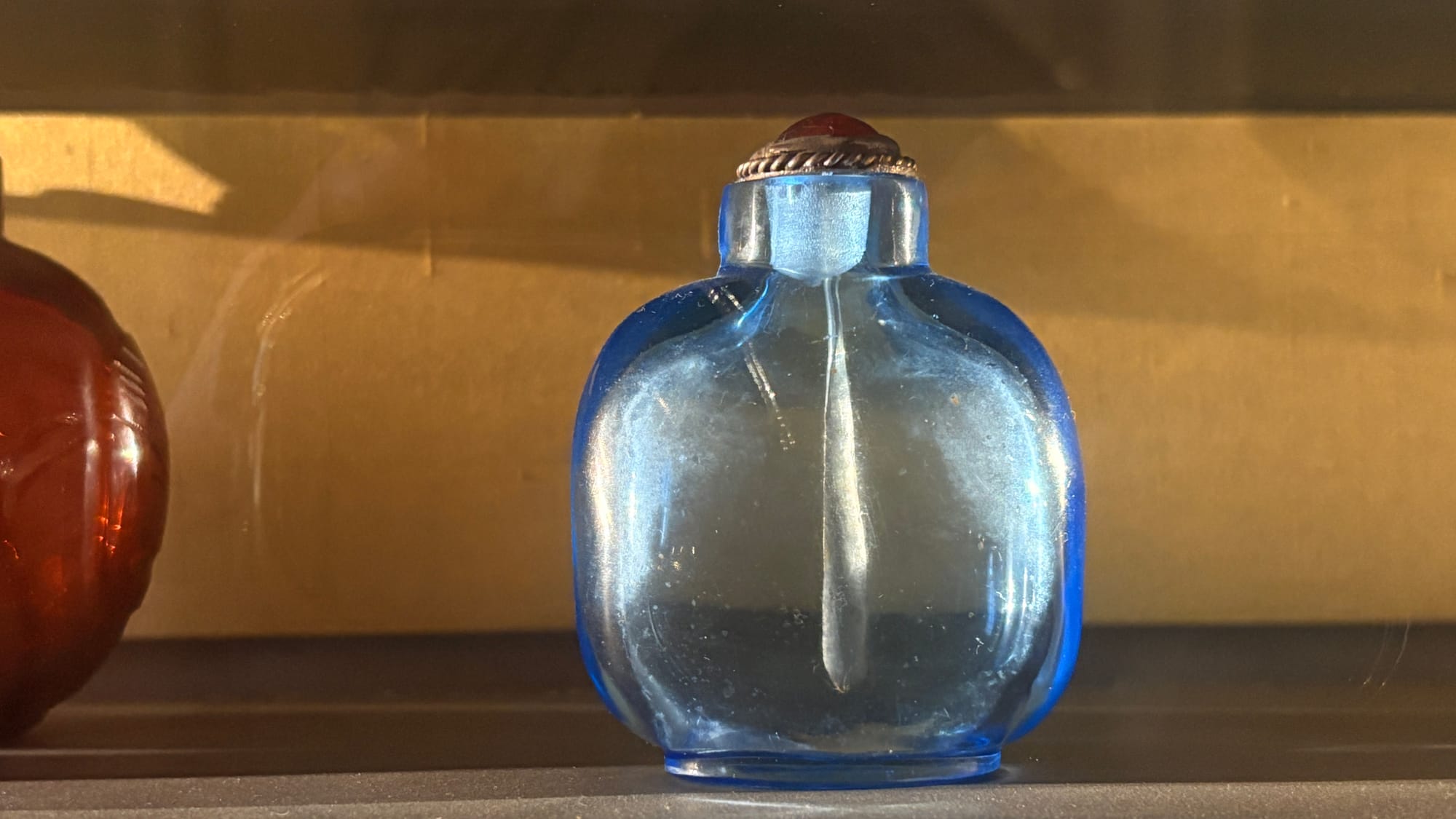
Gazing at the beauty of a wing or bottle, perception honed to a fine point, I hear many interwoven threads of music, and even in stillness I am witnessing a dance involving the history of the object, how it was made and used and how it will live out its fate in a radically shifting ecosystem or an inert museum case. In these moments I am not wondering whether these musics will make me dance or feel anything in particular. I am captivated by something else entirely, more closely approximating l'odeur du temps. Something shapeshifting and unnameable, the way music can carry the energy of a moment and in that moment precisely match the curvature of time as I am experiencing it in its unfolding, uncorrupted except for my facile wish to understand why and how it could be.
The osmanthus tree carries a scent that arrives at the nebulous overlap of suede, apricot, and floral. Because of its hybridity and lack of familiarity to the Western nose it is rare to find osmanthus noted with exquisite integrity in the perfume world. The animalic torpor of an oily flower is confounding and powerful, leading Chinese writers to have referred to it as 千里香, thousand-mile fragrance.
The flower's fragrance being the sum total of its chemical makeup exported for interspecies interlocution, the electronic PCB driving an interface for a human conductor, a collaged set of musics a sillage of the essence of life traversed, moments noted not exhaustively or meticulously but as a lyrical passage through the ocean of contents flowing and separating in currents through the Cultural Epochs dawning upon us and crashing against the shore, breaking waves, recoiling and splitting into a hundred more currents along the way. We have nowhere to return to and nowhere to go. The city of Ys flooded eons ago, denizens lost or transmuted into macabre mech-beings attached as by puppet strings to screens and panels of buttons in search of illumination of purpose and convenient apotheosis.
Generations later a beachcomber lifts shells to their ears and hears traces of music held within their cloisters. They sing of cities, some lost, some young, some dying, which brought forth skins of aural collage, sediment of ages, wrought by humans devoured by ecstasies and lust and grave despair, disintegrating at the moment of arrival, cells sloughing off in shared agonies.
Links to mixes
Quotes
1 On the Marionette Theatre, Heinrich von Kleist
References
More Brilliant Than the Sun, Kodwo Eshun
Trois-Quarts Taxi System invite Damna | Rinse France
The Artist's Way, Julia Cameron
Where I'll be playing soon
August 15 | Portal, Portland, organized by Be Yourself PDX [DJ]
August 21 | Mess is Lore, New York [HYBRID]
August 29 | Dial, Berlin [LIVE]
September 24 | Osmosis in the Trees, Takilma, OR [LIVE]
October 15 | Supporting Zanias, Seattle, organized by Hierophant Booking & False Prophet [LIVE]
Other news
I wrote a remix for the track Projectile Projection by Damna, part of his EP Spikes released via Paris-based collective and label De la...je l'espère.
Thank you...
And of negative space, negative time, the time returned to us in memories and in forgiveness. Music speaks of these things too.